
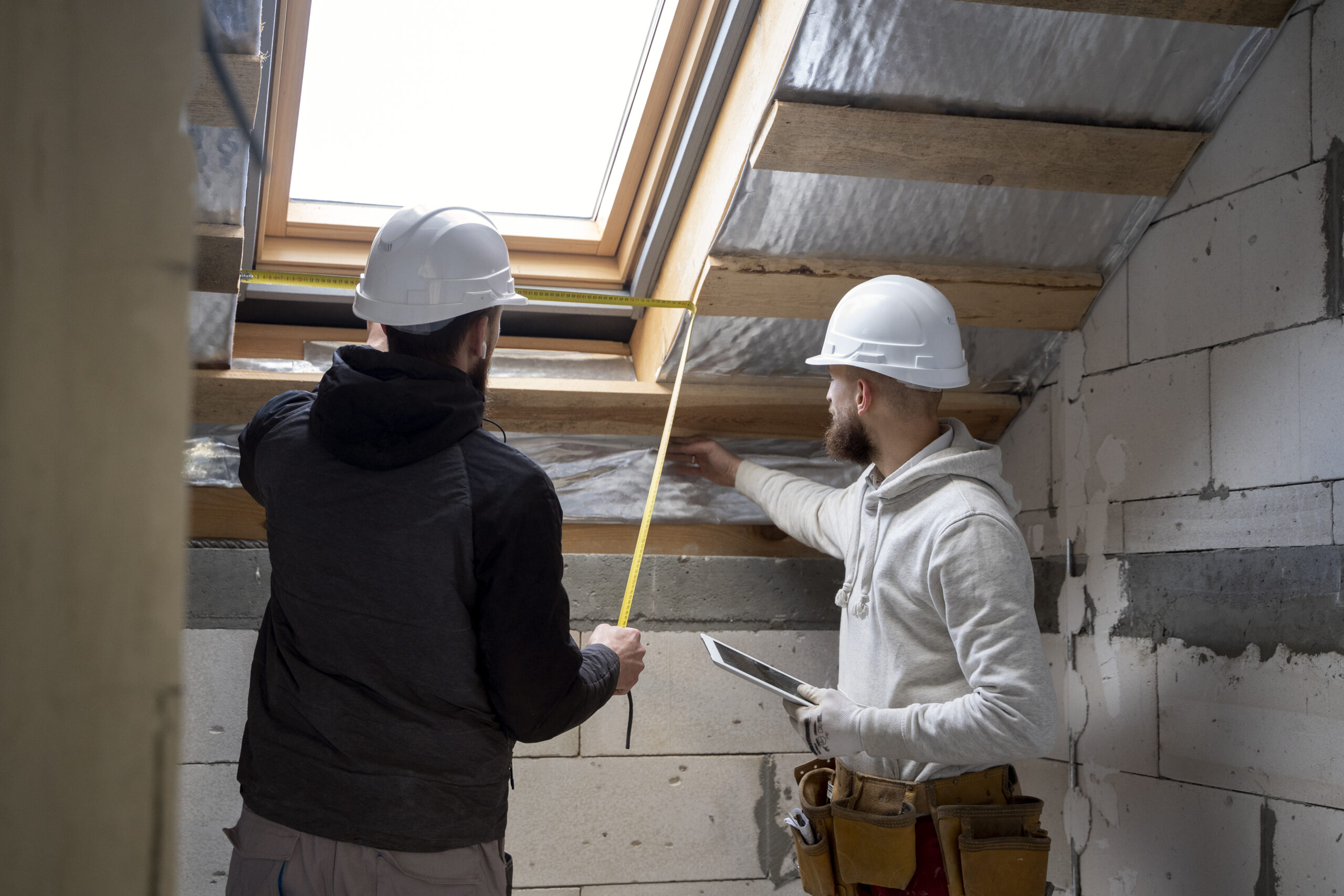
Passing a pre-completion sound test should not be a stressful milestone in your build schedule, but it often becomes one. A failed test can delay handover, require rework, and create additional cost at a stage where time is tight and budgets are fixed.
The good news is that first-time passes are absolutely achievable. Most failures come from avoidable details rather than major construction errors. With the right preparation, you can remove nearly all the risk.
This guide explains how sound insulation testing works, what causes plots to fail, and the exact steps you need to take to prepare your dwellings for a smooth first-time pass.
What Exactly Does a Sound Test Check?
Under Approved Document E (Resistance to the Passage of Sound), attached new-build dwellings must meet minimum acoustic performance standards. Testing is carried out by a UKAS-accredited engineer using calibrated equipment such as a dodecahedron loudspeaker, amplifier, and tapping machine.
Two types of performance are measured:
- Airborne sound insulation (for example: TV noise, speech)
- Impact sound insulation (for example: footsteps on floors)
These tests ensure that separating walls and floors limit sound transfer between dwellings. The testing process is simple, but plot readiness is essential.

How to Pass Your Sound Test First Time
1. Complete All Final Fix Work
A partially finished plot is one of the biggest risks. Before testing, make sure:
- Doors are hung and latch correctly
- Windows and frames are fully sealed
- Skirting boards are fitted and sealed
- Flooring is laid to its final level
- Sockets, switches, and radiators are installed
Why it matters: Gaps and unfinished surfaces create direct paths for sound to travel and can reduce your acoustic performance instantly.
2. Seal Every Air Gap and Penetration
Even a small gap can compromise acoustic performance. Check that:
- Behind skirting boards is sealed
- Sockets and light fittings have no gaps around the edges
- Pipe penetrations are sealed, especially in kitchens and bathrooms
- SVP boxing is complete and airtight
- Floor and wall junctions are sealed
- Redundant flues or chimney voids are closed
If you can see or feel a gap, sound will find it.
3. Ensure Party Walls and Floors Match the Approved Specification
Acoustic performance relies heavily on build accuracy. Common issues include:
- Missing or incorrectly installed insulation
- Insulation of the wrong density
- Bridged or incomplete cavities
- Incorrect resilient bar installation
- Missing or substituted acoustic layers in floors
If you took mid-build photos, keep them. They help verify compliance if needed.
4. Prevent Flanking Transmission
Flanking occurs when sound bypasses the separating wall or floor by travelling through connected structures such as steelwork or stairwells.
Look out for:
- Blockwork that does not carry fully into the roof
- Gaps above plasterboard leading into loft voids
- Unsealed junctions around beams
- Poor detailing around stairwells
Many test failures are caused by flanking paths rather than the separating wall or floor.
5. Keep the Area Completely Quiet on Test Day
Noise affects the accuracy of both airborne and impact tests.
Make sure:
- No trades are working inside or outside the test plots
- Tools, extract fans, and radios are switched off
- Doors remain closed during the test
- Neighbouring plots know when testing will take place
Even footsteps can interfere with impact readings.
6. Confirm Live Power Is Available
Sound testing equipment requires:
- Power
- Lighting
- Access to all rooms
No power means the test cannot take place.
7. Give Plots a Quick Clean
Loose debris can affect impact readings and make testing more difficult. A clean, tidy plot produces more reliable results and avoids unnecessary delays.
8. Have a Site Manager or Supervisor Available
Having someone knowledgeable on hand helps with:
- Access to neighbouring plots
- Immediate fixes for small issues
- Clarifying construction details
- Preventing delays and retests
It is one of the simplest ways to increase your chance of a first-time pass.
Common Reasons Plots Fail a Sound Test
The same issues appear frequently:
- Gaps behind skirting
- Missing or poorly installed insulation
- Unsealed penetrations
- Incorrect resilient bar fixing
- Excessive background noise
- Testing too early
- Flanking transmission
Address these and you remove most of the risk.
How Many Plots Need to Be Tested?
Requirements depend on the type and number of units:
- Most developments require 1 in 10 plots to be tested
- Houses require airborne tests only
- Flats require both airborne and impact tests
- Some sites may qualify for Robust Details and therefore not require testing
If unsure, we can confirm exactly what your development needs.
Ready to Book Your Sound Test?
Air Tightness Solutions provides UK-wide sound insulation testing, UKAS-accredited engineers, fast availability, and same-day certification. Learn more about our experience and approach.
We help you:
- Understand what needs testing
- Identify risks before testing
- Pass first time
- Meet all Part E requirements
- Keep your build on schedule
Want Pre-Test Advice?
If you would like us to review your plans, highlight common risks, or advise on build stage readiness, we offer guidance as part of every booking.
FAQs
What is a Part E sound test?
A Part E sound test measures airborne and impact sound insulation between attached dwellings to ensure compliance with Approved Document E.
Do plots need to be fully finished before sound testing?
Yes. All final fix works, including doors, flooring, skirting, and services, must be complete for accurate test results.
What causes a sound test to fail?
Common causes include unsealed gaps, incorrect insulation, poor resilient bar installation, flanking transmission, and background noise during testing.
What is the difference between airborne and impact tests?
Airborne tests measure sound that travels through walls. Impact tests measure sound that travels through floors from footsteps or impacts.
When should sound tests be carried out?
Once plots are fully finished, clean, quiet, powered, and ready for Building Control inspection.
How long does sound testing take?
Usually 1 to 2 hours depending on access and the number of walls and floors requiring testing.
How soon do you receive the certificate?
We provide same-day or next-day Part E compliance certificates for Building Control.
How many plots require testing?
Typically 1 in 10 plots, with airborne tests for houses and airborne plus impact tests for flats.
Can you prepare for a sound test?
Yes. Sealing gaps, finishing all fix work, preventing flanking, and ensuring quiet conditions significantly increase your chance of a first-time pass.
Do all new builds require sound testing?
Most attached new-build properties do, unless they use a verified Robust Details construction.