
When it comes to meeting UK Building Regulations, most builders focus on insulation values, heating systems, and renewable technologies. Yet, one of the most critical and often overlooked components of energy efficiency compliance is air tightness testing.
What Is Air Tightness Testing?
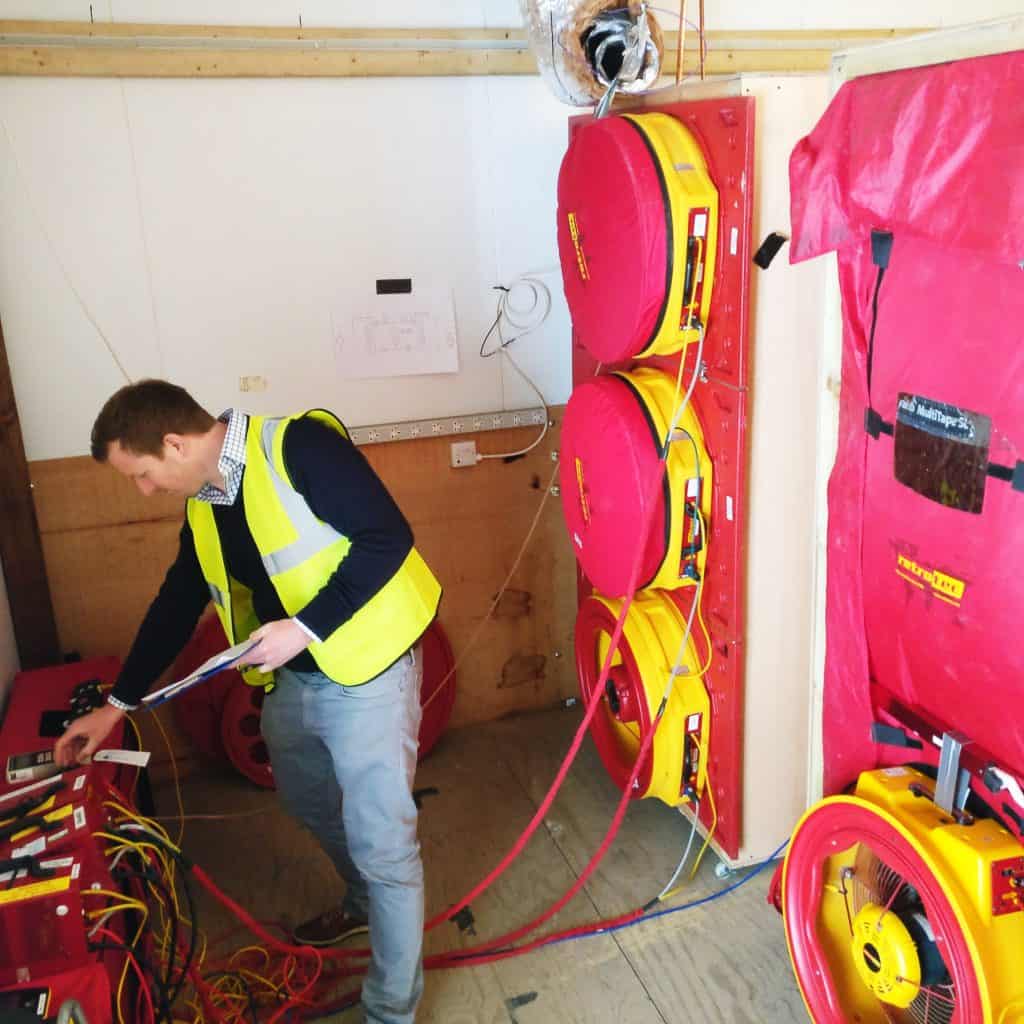
Air tightness testing (also known as air permeability testing or a blower door test) measures how much air leaks through the fabric of a building when it’s pressurised. The test is conducted according to CIBSE TM23 and BS EN ISO 9972:2015, ensuring that your property meets the airtightness standards required under Part L of the Building Regulations. A low leakage rate means your building is energy-efficient, comfortable, and compliant, while excessive leakage could mean heat loss, higher bills, and a failed compliance certificate.
A low leakage rate means your building is energy-efficient, comfortable, and compliant, while excessive leakage could mean heat loss, higher bills, and a failed compliance certificate.
Achieving Air Tightness Testing Compliance: The Hidden Role
Air tightness testing isn’t just a box to tick; it’s the silent validator of everything else you’ve done to meet regulations. Even if you’ve invested in high-performance insulation or triple-glazed windows, a poor airtightness result can undermine your EPC rating and Part L compliance. This makes air testing the final quality checkpoint before handover, confirming that the building fabric performs as designed.
This makes air testing the final quality checkpoint before handover, confirming that the building fabric performs as designed.
1. It Proves Energy Efficiency
Building Regulations require that the designed air permeability target (measured in m³/h·m² @50Pa) is achieved. The test verifies this in practice, giving measurable proof of your building’s energy efficiency.
Passing your air test isn’t just about compliance, it demonstrates that your construction techniques genuinely deliver thermal performance.
2. It Supports SAP and EPC Accuracy

Your airtightness score directly affects the SAP calculation and EPC rating. A building that performs better than expected can benefit from a lower Dwelling Emission Rate, while one that fails may require costly remedial works or retesting.
3. It Detects Hidden Defects Before Occupancy
The test doesn’t just produce a number; it’s also a diagnostic tool. Using smoke pencils or infrared imaging , testers can pinpoint air leakage paths, like poorly sealed service penetrations, gaps behind skirting boards, or unsealed loft hatches. Finding and fixing these issues before occupation prevents long-term energy loss and moisture risks. Air tightness testing compliance relies heavily on this diagnostic capability.
4. It Ensures Comfort and Indoor Air Quality

A well-sealed building provides consistent temperatures, improved comfort, and better control of ventilation systems. By managing airflow properly, you reduce draughts and humidity problems, supporting both health and sustainability goals.
5. It Validates Quality Workmanship
Passing your air test on the first attempt reflects a high standard of workmanship across trades. It confirms that detailing at junctions, seals, and penetrations has been executed correctly, giving developers, contractors, and clients confidence in the overall build quality and in achieving air tightness testing compliance.
The Bigger Picture: Compliance, Quality, and Reputation
Air tightness testing is often the last step before sign-off, yet its impact is far-reaching. It influences:
- Regulatory sign-off (Part L / Section 6 compliance)
- Energy efficiency ratings (EPC/SAP)
- Occupant comfort and running costs
- Your professional reputation
In short, it’s the unsung hero of building compliance. Quietly ensuring that design intent translates into real-world performance.
Final Thoughts
While it may not have the glamour of solar panels or heat pumps, air tightness testing underpins the credibility of every sustainable build. As the UK construction industry moves toward net-zero standards, airtightness will continue to be one of the clearest indicators of quality, compliance, and efficiency.
Ready to Make Compliance Effortless?
Don’t let airtightness be the weak link in your project. Our ATTMA-accredited engineers deliver fast, compliant air tightness testing in line with CIBSE TM23 and ISO 9972 standards. Complete with same-week availability and certification.
Book your air tightness test today and make sure your build passes first time with confidence.